EN
EN  PT
PT  FR
FR  ES
ES  RU
RU  DE
DE  AR
AR  ZH
ZH 
Inspiring the Next Generation of Industrial Imaging Engineers
Industrial imaging lies at the heart of modern manufacturing, aerospace, energy, and infrastructure development. Whether revealing hidden defects inside an aircraft engine, inspecting the cooling channels of a hydrogen fuel cell, or ensuring pipeline integrity deep underwater, precision imaging is reshaping how industries operate. As technology advances and inspection systems grow increasingly intelligent, there has never been a more important—or exciting—time to cultivate the next generation of industrial imaging engineers. Today’s industrial challenges demand multidisciplinary expertise. Future engineers must move beyond traditional mechanical design or optics alone and embrace a fusion of fields: software algorithms, artificial intelligence, micro-optics, robotics, materials science, and data analytics. This new era of industrial imaging calls for talent capable of integrating knowledge, collaborating across disciplines, and innovating solutions for environments where human eyes cannot reach.
Inspiring these future leaders begins with exposure—introducing students to real-world problems long before they graduate. Partnerships between industry and universities play an essential role. By collaborating with engineering schools, companies can bridge the gap between theoretical study and hands-on application. Research collaborations, joint laboratories, and co-development projects give students experience analyzing imaging algorithms, designing flexible probe mechanics, or optimizing optical pathways, all while contributing to live industrial challenges. Equally transformative are internship and training opportunities. When students gain access to industrial-grade endoscopes, image processing tools, and controlled testing environments, learning becomes immersive. They discover not only how technologies work, but why they matter—how a millimeter-level inspection can prevent a turbine failure, or how imaging in a nuclear facility can protect lives and infrastructure. These experiences ignite curiosity and fuel passion for innovation.
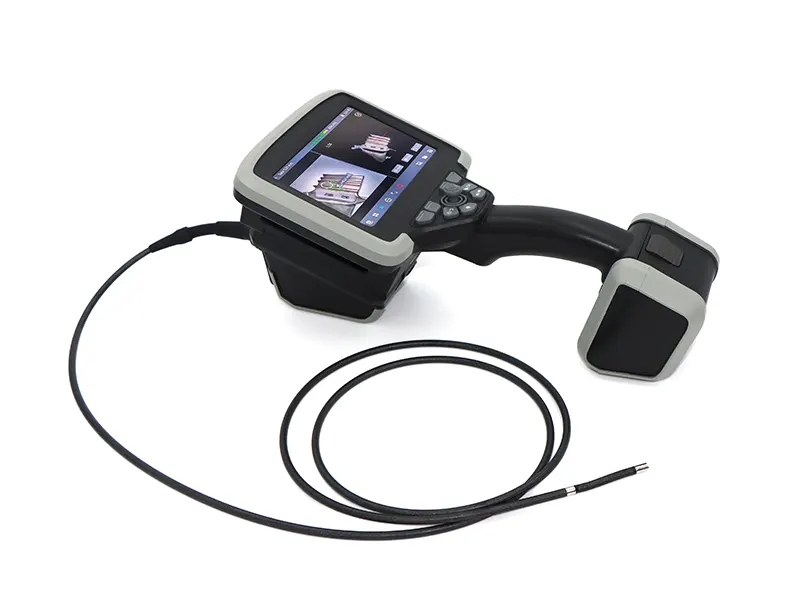
Mentorship is another cornerstone in cultivating future imaging engineers. Leaders who have developed groundbreaking technologies—such as ultra-thin articulating probes, dual-camera measurement endoscopes, or advanced optical systems—carry knowledge forged through decades of trial, error, and achievement. When these experts mentor young engineers, they pass on insights that cannot be found in textbooks: how to think critically, how to test ideas rigorously, and how to turn theoretical concepts into tools that transform industries. Inspiring the next generation also means demonstrating the real-world impact of industrial imaging. Unlike abstract academic work, industrial inspection delivers visible results: safer power plants, more reliable aircraft engines, longer-lasting infrastructure, and more sustainable energy systems. When students see that their innovations directly support national development, global safety, and environmental responsibility, engineering becomes more than a career—it becomes a mission.
Access to cutting-edge tools is essential. As endoscopes evolve toward higher resolution, smarter software, and smaller diameters, students must be trained using the latest technologies. Providing educational kits, lab equipment, or simulation systems enables universities to prepare engineers for modern inspection demands. This democratization of innovation increases the talent pipeline and accelerates national technical capability. Looking forward, the industrial imaging field will be shaped by emerging trends—from AI-driven defect recognition and autonomous inspection robots to digital-twin-driven maintenance and 3D measurement visualization. Preparing young engineers to lead these breakthroughs requires creativity, curiosity, and a willingness to explore uncharted territory. Encouraging hackathons, innovation competitions, and multi-disciplinary project teams helps cultivate the problem-solving mindset needed for future discovery.
Ultimately, inspiring the next generation of industrial imaging engineers is not just about skills—it’s about purpose. It is about nurturing individuals excited by challenge, motivated by impact, and eager to push the boundaries of what is technically possible. Companies at the forefront of the industry have a responsibility not only to innovate, but to educate, empower, and share their expertise with the scientists and engineers who will carry industrial imaging into the future. Because every groundbreaking tool, every micro-sized articulating probe, and every ultra-high-resolution imaging system begins with inspired minds—curious enough to explore what lies beyond the visible, and bold enough to build the tools that make the invisible seen.